Showing posts with label Travel. Show all posts

Monday, June 2, 2014

The Rainforest: a place full of amazing.

Why is rainforest biodiversity so special, and why do so many plants and animals call it their home?
In the last two years, I’ve had the privilege of visiting two of the great tropical rainforests of the world: the Ecuadorian Amazon, and the Bornean rainforest. I consider it a privilege, because the majority of people in the world never set foot inside of a rainforest. 50% of the world population live in cities, and that number is projected to jump to 70% during the next 35 years. The tropical rainforest is just about the last place the average human would want to venture into, and it’s not that hard to see why. It’s almost impossible to live in it.

Somewhere hidden between all those leaves and branches are countless species of insects, and other animals, invisible to our eyes. 

When western explorers first ran into the rainforests of the Amazon, Africa, and Southeast Asia, and saw the immensely dense growth and all of the gigantic trees, they concluded that the soils there must be the most fertile on earth. Counter to intuition however, the soils there are some of the most nutrient poor on earth. This is because nutrient cycling is incredibly fast in the rainforest, and any nutrients that make it into the soil are immediately absorbed by the roots of all the plants and taken up into the canopy. In fact, 99% of the nutrients of the rainforest is found in the vegetation itself, and not the soils. So any crops one tries to plant in the rainforest will surely fail.

Other than the puny human (try to spot the climber up there!), within those trees are a whole lot of nutrients. 


If that wasn't enough of a deterrent to any would-be residents of the rainforest, the rainforest is also an incredibly dense and arguably one of the most difficult to navigate environments in the world. There are few landmarks, and the trees are so high and the vegetation so dense that one can’t see more than 50m into the distance. It’s no coincidence that the word “jungle,” which is of sanskrit origin, means wasteland.  Without sufficient training, equipment, and supplies, a trip alone into the rainforest would end in disaster for the average person. Our primate ancestors called the rainforest their home, but ever since humans evolved their way into the savannas of Africa, few have ventured back into their ancestral home. We just can’t live in it.

Funnily enough though, in the grand scheme of things, humans seem to be the great outlier in terms of where we live. Covering less than 2% of the earth’s surface, the rainforest nevertheless contains more than 50% of the world’s species of plants and animals. More and more are discovered every day. And not just small things like insects (like the plant hopper!) or plants (like this crazy Chilean chameleon vine – technically not in the rainforest but too cool to not share). Mammals have been discovered as well, as shown by the recent discoveries of the Olinguito in the Amazon, and the venomous Slow Loris in Borneo (the only known venomous primate in the world!). Considering all of the life that’s out there, it’s crazy to think that many scientists estimate that only one fifth of the world’s species have been described. Even how the rainforest became so biodiverse is kind of a mystery, and there’s a multitude of theories proposed to explain it. One of the reasons given is that the environment is so heterogeneous and complex (to begin with, there is a vertical element not seen in other environments to the extent as it’s seen in the rainforest, which has trees 200+ft) that there are thousands of potential niches for different animals to occupy, and speciate.

The golden-mantled tree kangaroo, recently discovered in the Foja mountains of Indonesia. I didn't even know there were kangaroos on this side of Wallace's line!


So with all of this biodiversity in the rainforest, you might think that if you walk into the rainforest, you’ll be running into all sorts of animals left and right. The truth is not quite that however. With all those impressive biodiversity facts and species numbers I always heard about, the first time I visited the Amazon rainforest in the fall of 2012, I was expecting to run into all sorts of crazy animals the minute I walked out. So you can imagine my surprise when I found the rainforest to appear overwhelmingly uniform. And to the untrained eye, that’s exactly what it looks like: one big pile of green. Broccoli broccoli broccoli, everywhere. Out in the open, there are no animals in sight or anything besides bunches of of branches, vines, and leaves. You might spend a few days in the rainforest, and then leave thinking “alright, I think I saw all there is to see.” But in actuality, that couldn't be farther from the truth.

To get the most out of the rainforest, and experience the biodiversity that it has to offer, it takes a lot of patience, and a very observant eye. You know for a fact that everything is out there because your ears don’t lie. You can hear the call of the wild every morning and every night, when multitudes of species in the rainforest – cicadas, gibbons, birds, etc. – call out and resonate throughout the rainforest. But everything, absolutely everything is hiding. Under leaves, blending into the cracks of tree trunks, high up in the canopy, almost every form of life out there blends into its surroundings, and appears invisible to those who don’t know where to look. But it The longer you spend in the rainforest, the better you’ll be at spotting everything. It’s not ‘til then that you realize you could spend every hour of every day walking around in the rainforest, and not see everything. Even the big things! I have spent almost a year now living at Gunung Palung National Park in Borneo, and I’ve yet to see any sun bears, leopards, pythons, or lemurs. But they are out there, and I’m still holding out hope that I’ll at least get to see a bear before I leave!

If I act like a sun-bear, maybe all the sun-bears will come out too.


It takes a bit of luck to see cool things out here, some of which I’ve had during my time at Gunung Palung. I’ve definitely seen over 15 orangutan matings now (so many that I’ve lost count!), which tend to be pretty rare events to see, much less capture on film (which I also have!). I’ve also seen two male orangutans go at it head to head on the ground, extremely rare events to witness. My most notable sighting, and the source of a bit of jealousy at camp, was when a Binturong (AKA, a bearcat!) ran up to me as I was sitting somewhere up in the mountain; I heard a noise coming down hill, and prepped my camera, unknowing of what exactly was coming down but ready to get it on film. I got really excited when I saw what it was, but it passed by me so quickly that I could only capture a moving blur on the camera. But the ‘cat’ in the bearcat was a curious creature indeed, and when it spotted me it turned around for a closer look. As it stared at me from a few meters away, I managed to snap this photo, proof of my sighting to everyone at camp!

A Binturong, AKA a Bearcat. I bet there are only a handful of non-camera trap photos in the world taken of these guys in the wild. 

Every time you step into the rainforest, what you see is luck of the draw, a spin of the wheel. But with some patience and a good eye, you can double the odds. The rainforest can definitely be a bit overwhelming, but it is without a doubt an awesome place to explore. 

Monday, August 19, 2013

River Ride to the Rainforest

The sun hadn’t yet risen, and I was already lurking around my temporary home in Ketapang, a small town in Western Borneo. It was 4am, and I could already hear the Ramadan dawn prayer chants resonating throughout the town. In just one hour, I needed to be ready to load my few belongings into the truck that would drop our group of five at the small village where we would begin our 8-hour river journey into the rainforest. After a quick breakfast and a few goodbyes over the internet, I headed out the door to meet up with my companions for the trip: BU Anthropology professor Cheryl Knott, National Geographic photographer Tim Laman, and their children Russell and Jessica. As I loaded myself into the truck, a fact hit me: it would be my last time in civilization for at least a few months.

The road to the village was long, but the change in scenery as I left the city of Ketapang was as striking as it was pleasant. The cities in Indonesia aren’t very keen on including much green in their city planning, and it was nice to see trees and grass around me for once. We were driving on a narrow road that tried but clearly failed to accommodate the two lanes it was supposed to have, as we had to sway to the side every time a car or a motorcycle came in the opposite direction. The residents here live a simple life in fragile-looking shacks with moss-covered planks and aluminum roofs. A lot of people were just sitting on their porch, enjoying the fresh morning air. As we made it further into our journey, the houses became fewer and farther between, until they were completely replaced by flatlands and rice-paddies. By mid-morning, we had made it to the village. We stopped at the house of a man named Udin. We had hired some of his sons to paddle us upriver in sampans, all the way into the heart of the rainforest of Gunung Palung National Park. We had a problem however: the four sampans were too small and too few to take both ourselves and all of our baggage. We decided to leave some of our less important bags behind, which would be paddled upriver in a few days. After a bit of organizing, we boarded the small and shaky canoe-like boats.

We were off. After paddling through the rest of the village and being greeted by some river by- standers, our river guides turned on some very loud home-rigged motors strapped onto the back of the boats. The increase in pace from paddle-speed to motor-speed however, justified having such a loud device constantly broadcasting its mechanical noises throughout the river. We made our way through various changes of scenery: secondary forest, logged forest, rice paddies, and swamps. On the way, I saw strange new fruits, birds, butterflies, and even some macaques up in the trees. After a few hours, we made it to the thick cover of jungle, which was a nice relief from the powerful and burning sun we were exposed to for large part of our trip. After a nice dip in the water and a quick lunch of dried blocks of indomie (the Indonesian version of ramen-noodles), we continued through the thick forest on the narrow and winding stream between the green, luscious, collection of trees. We were forced to get off the boat and push on a few parts of our trip, as the water levels were too low on some parts of the stream for the sampan to get through unassisted by pushing from human hands, and I discovered that there are little fishes that nibble at your feet while you’re in the water...which is a nice alternative to the dozens of spiders that get on you every time your face smacks into leaves and branches hanging over the river.

I had heard stories from Tim and Cheryl earlier about instances where they had barely made it halfway to the research station before having to get out and push the boats. If something like this occurred, it might mean making it to the end sometime in the early AM, or perhaps even after sunrise. Luckily, the water levels were as nice as they get, and minimal pushing was needed. We ended up making really great time. We had been previously told by Udin that we would make it to the station by 9pm, but at our current pace we were set to get there around 6:30pm. Sure enough, by 6pm we were getting closer to our jungle home. Cheryl pointed out some trees with red trunks to me: a sign that we were close. I began to see a light flickering in the distance. As it moved closer, my eyes began to construct an image of Cabang Panti: 15 feet above the river and stretching from river-bank to river-bank, was a wooden suspension bridge...the kind that you might see in an Indiana Jones movies (you know, the kind that stretches over a huge precipice with hungry alligators waiting for bad-guy meat in the river below). Beneath it, and poking out into the water, was a small dock held in place by a set of wooden stairs that led up to the riverbank. There, covered by the shadows and silhouettes of the nearby trees, was the lab bulding: a two-story structure suspended on a series of stilts that sunk into the exposed patch of dirt beneath it.

We had made it. Upon arrival, we were greeted by the only people around: camp-manager Jenn, BU grad-student Caitlin, and a French researcher named Sylvain. Since the usual Cabang Panti staff were on their vacation for Idolfitri, they had planned to make dinner for us by the time we got there. We had surprised them by our early appearance at camp though, but dinner was soon underway a few minutes after our disembarkment. As you might imagine, a block of indomie doesn’t cut it for a full day river journey into the jungle, and I was starving.

After a refreshing bath in the river to offset the typical hot and humid jungle weather, and to remove the jungle-funk I had accumulated during my sweaty full-day boat ride, I settled into my tent with a belly full of food and a heart full of adventure.

Day one in the Jungle: Check.

Thursday, August 30, 2012

Journey to the center middle of the earth.

Boston, MA. 6:00 AM, Tuesday August 14th, 2012. All my bags were packed, I was ready to go I'm standing here outside your door. The day I was waiting for had finally come.


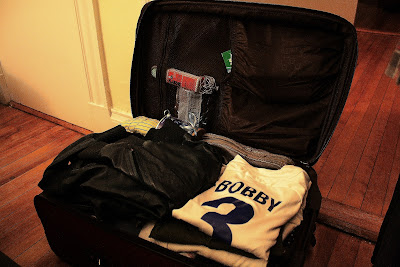
Obligatory (and stereotypical) shot of my luggage. 


I was catching a flight from Logan Airport to Miami in about three hours, where I would join up with the rest of the people studying abroad this semester (of which I had only met one so far) and catch a group flight to Quito.


3,055 miles. And my first time in the southern hemisphere - I hear everything is upside down over there.

I am well known for being a huge procrastinator, which is the reason I finished packing all of my stuff around 4am the night before. I didn't have time to make coffee, so I was running on sheer excitement and the frozen yogurt I had at Mixx with Hernando, Tina, and Stephanie (roommate, roommate, and tele-roommate, respectively) the night before.


I needed to fill my quota for the semester, I don't think I will find very much frozen yogurt anywhere in Ecuador. 


All three of them decided to accompany me to the airport that morning. Steph showed up at our door like at 6:15, at which time we all hopped into Tina's new car (whose name is Nöelle).  


Hernando and I agree -Stephanie sucks at taking pictures. I had to run it through like 3 filters so it would look decent.


We weren't going straight to the airport however - Oh no...we were taking a delicious pit-stop at The Breakfast Club, a breakfast joint in upper Allston. I am the biggest breakfast person you will ever meet (sometimes I go to sleep excited because I know I'll be having breakfast the morning after). I couldn't leave the US without having one last fix. And yes, this place is named after the eponymous 80s movie -which just adds the the awesomeness.


Seriously, look at this menu. Guess which one I had.


OMNOMNOMNOMNOM


After that huge plate of Basket Case goodness (of which no food items were spared), it was airport time - but not before Hernando, Tina, and Stephanie decided to surprise me with some farewell gifts. Stephanie (who has a weird fetish for japanese/korean stationary products) gave me a sweet notebook to write in while I was abroad - she had judged me for buying 75¢ composition books at Target the other day, and couldn't let me leave without having something "decent" to write in. However, I think my favorite thing was the custom coloring book she made for me, complete with Charles Darwin, Incas, llamas, and blue-footed boobies.


Actually, Blue-footed "Bobby"


Hernando and Tina (ok, mostly Tina - but Nando helped...maybe) made me a sweet farewell "card" - and I say "card" because it was actually a bag from REI converted into a great collage with pictures from our previous year together. At this very moment, it hangs in my Ecua-room.
Best roommates ever.


After a few more "awww" moments of roommate bonding, we got to the airport and said our last goodbyes. I was off. Getting through airport security was easy enough - I even met another person in the program while all my crap was going through the X-ray machines. I met even more once I got to the gate. We talked for a bit (mostly about how big our bags were and something about British game shows), but pretty soon it was time to board the plane. My strategy to not sleep the night before payed off, as I slept pretty much the whole way to Miami.

My phone was not in airplane mode when I took this. #WhatABaddass


Back in Boston, I had made the mistake of not making sure my checked bag was transferred to the connecting flight in Miami - and it was basically because I had been too lazy to find and give the flight information to the airline lady. So when I got to Miami, I had to exit security, pick up my bag at the claim, check it at the LAN counter (which was on the other side of the goddamn airport), and go through security again (but I'm going to Ecuador so who cares...first world problems right?). I finally made it to the international gate, and here I met pretty much everyone else on the program. Seemed like a solid group.

Again, I slept through a large portion of the flight to Quito (I can sleep anywhere if I set my mind to it - it's a handy skill/superpower to have). I woke up again a little bit before landing - and by that time, it had already gotten dark. When we made it over land and got close to Quito, I was absolutely blown away. Seeing all of the huge mountains and the deep valleys of the Andes all covered in lights was one of the craziest sights I had ever seen.


I took this picture but it does not do justice to how amazing it was in any way whatsoever.

Flying into Quito for the first time. (taken from: http://thetimeistudiedabroadinecuador.tumblr.com/)


I was already pumped,  but that sight multiplied my excitement by about x9001. I could already tell this was going to be a magical place. Once we landed, I made it through customs pretty easily (well, let's be honest...as easily as getting through customs can get - that crap always sucks no matter how you spin it). My host mother Irene was waiting for me outside the airport entrance. We had emailed before, but I had no idea what she looked like or even how old she was. Thankfully, she was holding up a sign with my name on it. We walked outside together, and I was surprised with how great the temperature was - cool, but not cold...although the flannel I was wearing helped). Her husband Adolfo was waiting for us in a boxy little blue Volvo from the early 90s. 

On the way to my new home, they talked to me about Quito a little bit, asked me questions about what I was studying, and where I was from. They were also surprised (and a little relieved, I think) that I spoke Spanish. They came off as a very cute and old-fashioned couple - just think of a pair of adorable grandparents. She is a stay-at-home wife, and is like one of those grandmas who constantly spoils you and gives you more food than you could possibly eat so you're not too "flaquito". Adolfo makes furniture for a living, and loves classical music. In fact, the first thing he did when we got to the house was show me the basement (that sounds weird, I know, but I'm not done). This is like his lair, where he keeps some of the furniture he's made (which is stunningly beautiful by the way - so much old world craftsmanship, it's the kind of furniture you would expect to find in the bedroom of some duke in a royal palace in England - and that's not hyperbole) and sits down to listen to classical music every night while he reads the bible (they are also very religious).

They told me I shouldn't eat anything heavy for dinner, because my body needed to acclimatize to the altitude and eating something big right away would almost certainly end badly - so they just gave me some bread and cheese (no complaints, those are two awesome foods right there). Oh, and they also gave me some mate de coca (yes, the same coca as cocaine, which is probably why it's illegal in the US), a great tasting tea that has been used for generations as a remedy for altitude sickness - and pretty much every other ailment - by Andean natives. (In case you were wondering, no, I did not get high).

Afterwards, I went into my new room, did the usual moving-in chores, and jumped into bed. It had been a long day, but 3,500 miles later, I could tell an adventure was brewing - of which I will be writing about very soon. 

But for now, I'll just leave you with these pictures of my new 'hood:
 
The entrance to my new home. So welcoming.

I live in the white house. Part of Pichincha, the volcano, can be seen in the background. Fun fact: Pichincha is to the west, and you can use it to orient yourself from anywhere, because Pichincha is visible from anywhere in Quito.


The other side of the street, leading up to 10 de Agosto, one of the main avenues in Quito. 10 de Agosto is known as the date of the "Primer Grito de Independencia", the day that sparked the revolution and independence from Spain. A lot of streets in Quito are named after important dates.


Thursday, August 23, 2012

Where to start?

Where to start? - that's always the hardest part isn't it? I suppose I'll start with the obvious...my name. You can call me Robert. Or Bobby (the fact of the matter is that I have way too many nicknames, so let's just stick with those for now). I'm a Biology and Anthropology student at Boston University - and I'm a senior (it still sounds strange to my ears...when did this happen again?). I decided to start this blog (a word which I find really annoying but it is what it is) to document my travels and experiences in Ecuador. 

I'm participating in BU's Tropical Ecology Program, where I will spend the semester (and I quote) "studying the vast and diverse ecosystems of Ecuador through intensive hands-on experiences and field research in the montane, tropical rainforest, and coastal regions." Basically, this is BU's eloquent way of saying I will be traveling around Ecuador doing and seeing some really awesome things in the mountains, the coast, the Galapagos, and the Amazon. Boom, BIOLOGY. 

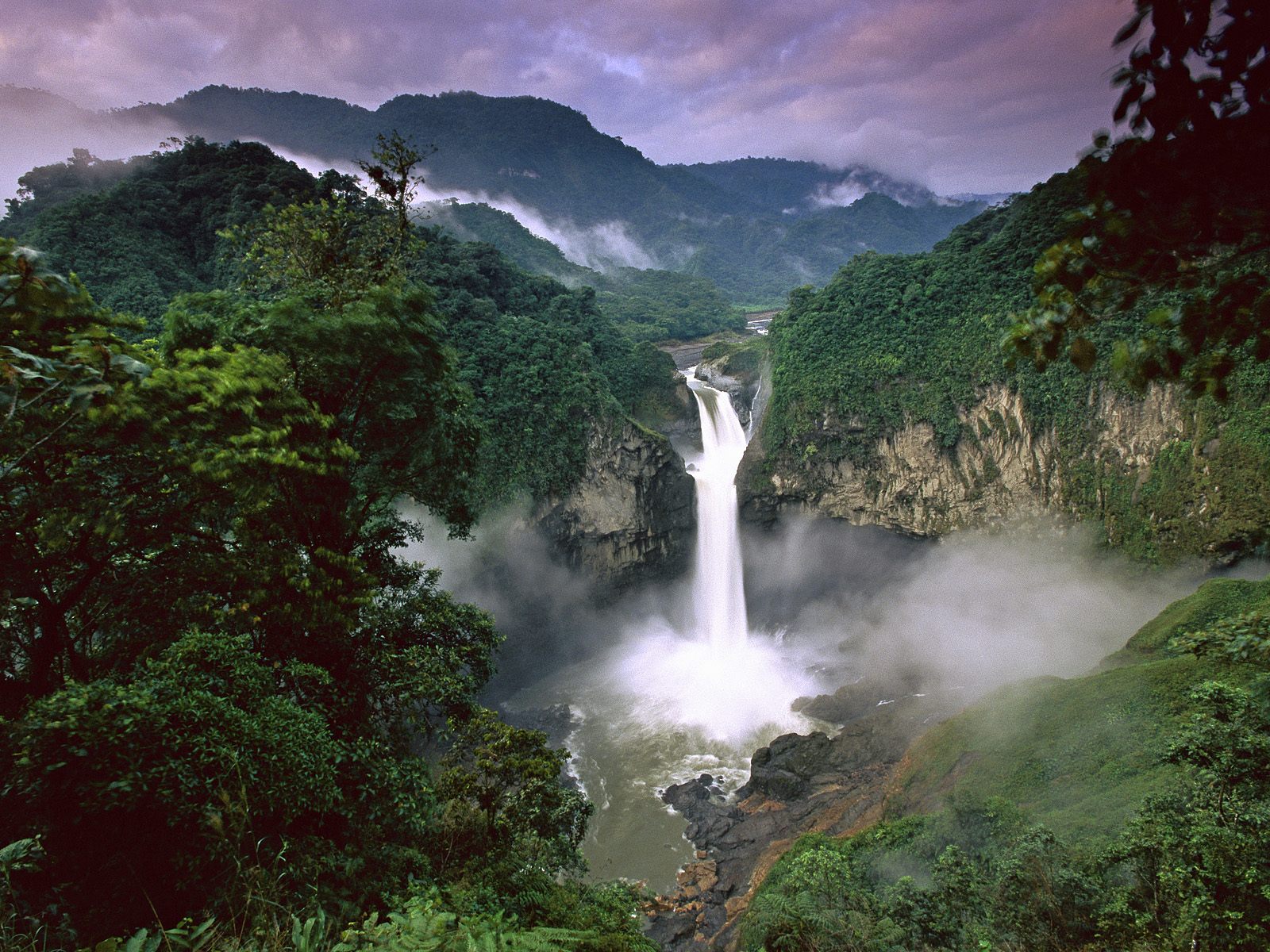
Yasuni National Park, Amazonia. I will be near here in November. If I see a waterfall, you'll see me jumping off.


What this also means is that I will be living in Quito for around 5 months. I'll be staying with an Ecuadorian family, taking public transportation, eating local foods - giving me the chance to experience and learn about the city, its people, and what life is like there. Boom, CULTURE.

Quito with Cotopaxi in the background (Yes, I'm totally climbing that).

Let's think about this: Biology + Culture. What am I majoring in? (hint: read the fist paragraph again). With that in mind, I don't think I could have picked a better place to spend a semester abroad -it's the perfect opportunity to learn firsthand about what I've been lectured on for the past three years: nature and people. And it's an excellent opportunity to write about it - and incorporate a little bit of photography.

Like I said before, starting is the hardest part. It's especially true in this case, because (surprise) I've already been in Quito for a week. I meant to start writing as soon as I go here, but this is the first time I've had stable access to wi-fi since I got here on August 14th (but hey, it's alright - Ecuador is known for its biodiversity, not 4G-speed internet connections). I've already gotten a good first taste of Quito, and have plenty to write about - but everything has its time and place. Right now, there are just ideas floating around in my head - I don't know what direction this blog will take, and I'm excited to find out. 

But sometimes it's best to start at the beginning (and thus, there is my answer to the question).

Departure post coming tomorrow, and first impressions coming soon.